
 Card types
Vintage sports cards
In vintage, the card and the condition are two different assets. The same card can be worth ten times more in a high grade — which is why grading exists.
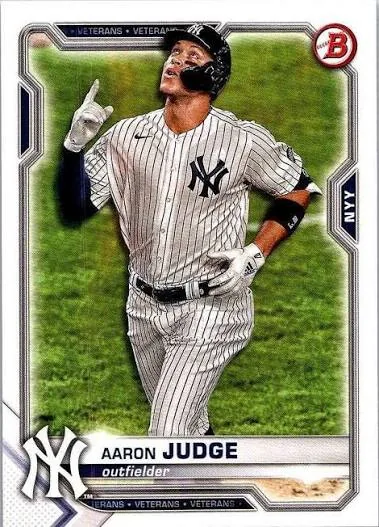
The four things graders look at
Every grading company assesses the same four things, and they are worth understanding before you submit anything, because they are also what a buyer assesses when a card is raw.
- Centring: how evenly the image sits inside the border. Usually the most heavily weighted.
- Corners: sharpness, and whether any paper has been lost.
- Edges: chipping, especially along dark borders, which show damage fastest.
- Surface: scratches, print defects, and any alteration such as trimming or recolouring.
Why grading matters more in vintage
In modern cards, the difference between a raw card and a graded one is mostly a convenience. In vintage, it is the market: raw vintage cards sell at a discount because the buyer cannot verify the condition, and a graded card removes that doubt.
That is why grading fees are easier to justify on vintage than on modern. A vintage card worth enough to be worth grading usually gains more from the slab than the slab costs.
- Raw vintage sells at a discount for uncertainty.
- A graded card is priced against other graded copies of the same grade.
- High grades are rare in vintage, which is where the multiples are.
- Alteration is the risk: it makes a card unsellable at full value.
Identifying vintage cards
Vintage identification is harder than modern: designs repeat across years, backs vary within a single year, and pre-war cards often have no card number at all. Getting the year and the set wrong can change a valuation by an order of magnitude.
Zenith reads the card from a photo and returns the identification with alternative matches, which is the useful part on older material — you confirm the year and set rather than trusting a single guess.
How it works
Three steps from a phone photo to a finished image
Scan the card
Point the camera at it — raw, sleeved, in a binder or in a slab.
Confirm the match
Check the player, year, set and parallel Zenith read.
See the value
The card lands in your collection with a market value attached.
FAQ
Frequently asked questions
What counts as a vintage sports card?
There is no official line, but the hobby generally treats cards printed before the 1980s as vintage, and pre-war cards from the 1900s to the 1940s as a separate category with its own market.
Why are vintage cards so expensive in high grades?
Because high grades are rare. Cards printed before modern handling standards were handled, stored and printed differently, so a card that survives in top condition is genuinely scarce — and the market prices that scarcity heavily.
Should I grade my vintage cards?
If the card is worth meaningfully more than the grading fee, usually yes. Grading removes the uncertainty that makes raw vintage sell at a discount, and it protects the card while it is out of your hands.
How do I identify an old card with no card number?
From the design, the year, the player and the back text. Older issues often have no number, so the set has to be identified from the design and the print details — scan it and confirm the match rather than guessing.
Try it on your next photo
Free to download on the App Store. iPhone and iPad only.