
 Card types
Baseball cards
Baseball cards are the oldest and deepest part of the hobby: the same card can be a 1909 tobacco card or a 2026 rookie parallel, and both have a market.
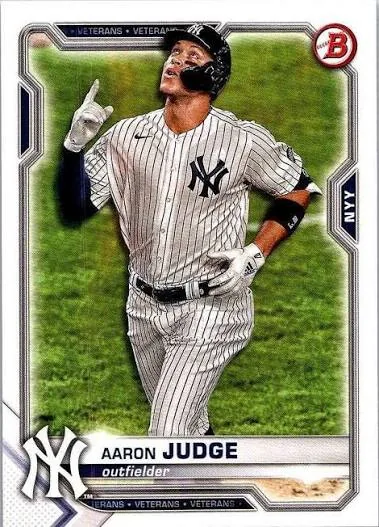
Vintage and modern are two different hobbies
Vintage baseball — broadly anything printed before the 1980s — is a condition market. Two copies of the same 1954 card can differ by ten times the price on centring and corners alone, which is why grading matters more here than anywhere else in the hobby.
Modern baseball is a supply market. Base cards are printed in enormous numbers and are close to worthless; the value sits in rookie cards, refractors, numbered parallels and autographs, where scarcity is deliberate.
- Vintage: condition, centring and eye appeal decide the price.
- Modern base: abundant, and usually worth very little.
- Modern rookies and parallels: where the money is.
- Sets to know: Topps flagship, Topps Chrome, Bowman and Bowman Chrome.
Reading a baseball card
The front gives you the player, the year and the design; the back gives you the card number, the set name and often the statistics that identify the exact release. For modern cards, the front also carries the parallel indicator: a refractor finish, a coloured border or a serial number stamped somewhere on the card.
The serial number is the most useful single detail. A card numbered to 25 is a different product from the same card numbered to 199, and the price difference is large and immediate.
- Player, year and set design on the front.
- Card number and set name on the back — this identifies the release.
- Rookie logo (RC) on modern rookie cards.
- Serial numbering, refractor finish or coloured borders for parallels.
Identifying a stack without a catalogue
The slow part of any baseball collection is identification: reading player, year, set and card number off hundreds of cards, then working out which parallel each one is. That is the step Zenith was built to remove.
Photograph a card and the app reads the identification, shows alternative matches where the photo is ambiguous, and attaches a market value built from recent comparable sales. Confirm the match and the card is in your collection with a value.
- Scan raw cards, sleeved cards, cards in binders and graded slabs.
- Confirm the match before anything is saved.
- Values come from recent comparable sales, not from a printed guide.
- Rookies and numbered cards first — they carry most of the value.
How it works
Three steps from a phone photo to a finished image
Scan the card
Point the camera at it — raw, sleeved, in a binder or in a slab.
Confirm the match
Check the player, year, set and parallel Zenith read.
See the value
The card lands in your collection with a market value attached.
FAQ
Frequently asked questions
Which baseball cards are worth money?
Vintage cards in high grade, modern rookie cards of established stars, low-numbered parallels and autographs. Ordinary base cards from the 1980s and 1990s are usually worth very little, because so many were printed and so many were kept.
How do I identify a baseball card?
Read the player and year from the front, then the card number and set name from the back, and check for a parallel indicator such as a refractor finish or a serial number. Those four details identify the card uniquely.
Is it worth grading a baseball card?
For vintage cards and modern rookies, usually yes if the card is in good condition — grading can multiply the value. For low-value base cards, the grading fee exceeds the card's value, so it is not worth submitting.
What does RC mean on a baseball card?
It marks a rookie card — the player's first card in a major set. Rookie cards carry a premium over later cards of the same player, which is why the logo is checked first when sorting a collection.
Try it on your next photo
Free to download on the App Store. iPhone and iPad only.