
 Card types
Basketball cards
Modern basketball is the most liquid part of the hobby: a Prizm rookie can be priced in seconds because so many of them trade.
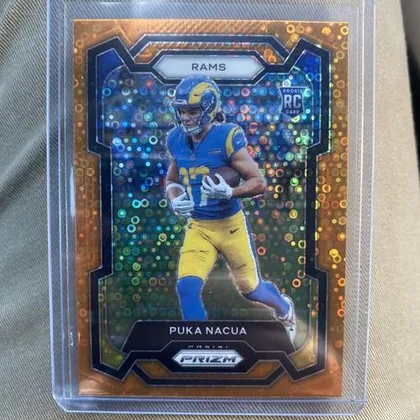
Why Prizm became the standard
A generation of collectors grew up with Panini Prizm, and its rookie cards became the reference point for a player's value the way Topps flagship is in baseball. When someone quotes what a modern basketball rookie is worth, they usually mean the Prizm version.
That concentration makes pricing easier and parallels more valuable: because so many people track the base Prizm, the numbered and coloured versions stand out clearly, and the market prices them accordingly.
- Prizm base rookies: the reference card for a modern player.
- Coloured parallels: Silver, Gold, Black and the numbered versions.
- Serial numbering: /199, /99, /25, /10 and one-of-ones.
- Autographs and memorabilia cards for established stars.
What drives a basketball card's value
Three things, in order: the player, the scarcity and the condition. A rookie card of a star in a low-numbered parallel is worth more than the same player's base card by an order of magnitude, and a graded copy adds a further premium if the grade is high.
Player performance moves prices faster in basketball than in any other sport, because the market is young and speculative. A single playoff run can move a rookie card substantially in a week.
- Player: performance and trajectory move the price fastest here.
- Scarcity: parallel, serial number and print run.
- Condition: centring and corners, especially on modern cards.
- Grade: a high grade on a modern rookie carries a large premium.
Scanning a basketball collection
Basketball collections tend to be modern and parallel-heavy, which makes identification the hard part: the same photo, the same player and the same year can be six different cards depending on the finish and the numbering.
Zenith reads the card and returns the identification with the parallel, then attaches a market value from recent sales. For a box of modern cards, that is the difference between valuing a collection in an afternoon and valuing it in a month.
How it works
Three steps from a phone photo to a finished image
Scan the card
Point the camera at it — raw, sleeved, in a binder or in a slab.
Confirm the match
Check the player, year, set and parallel Zenith read.
See the value
The card lands in your collection with a market value attached.
FAQ
Frequently asked questions
What makes a basketball card valuable?
The player, the scarcity of the specific version and the condition. A low-numbered parallel rookie of a star is worth far more than the base card, and a high grade adds a further premium.
Why are Prizm rookies so important?
Because they became the market's reference card: enough collectors track them that a player's value is usually quoted as the price of their Prizm rookie. That liquidity also makes the parallels easy to price.
How do I tell a Silver Prizm from a base card?
The finish: a Silver has a reflective, rainbow-like surface rather than the flat base finish, and it usually carries no serial number because it is not numbered. Numbered parallels such as Gold or Black are stamped with the print run.
Should I grade modern basketball cards?
For valuable rookies and low-numbered parallels, often yes — a high grade can multiply the price, and the market prices graded copies more confidently. For base cards, the fee usually exceeds the value.
Try it on your next photo
Free to download on the App Store. iPhone and iPad only.