
 Card types
Football cards
Football is the most rookie-driven market in the hobby: almost all of the value sits in a player's first cards, and the window opens the moment they are drafted.
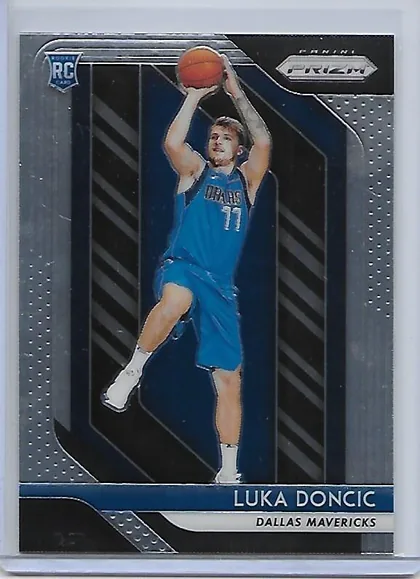
Why football is a rookie market
A quarterback's rookie card can move more in one season than most cards move in a decade, because the position is the most scrutinised in sport and the supply of any single rookie parallel is small. The market prices the future rather than the record.
That makes the rookie card the whole hobby in football. Base cards of established veterans are cheap; the same veterans' rookie cards, especially in numbered parallels or with autographs, are not.
- Rookie cards carry the premium, especially quarterbacks.
- Numbered parallels and autographs are where the largest sums are.
- Sets to know: Prizm, Optic, Select, Mosaic, Contenders.
- College cards trade before the player is drafted.
Identifying a football card
The front gives you the player, the year and the design; the back gives you the card number and the set. In modern football, the front also tells you which parallel you have: a holographic finish, a coloured border, or a serial number.
Rookie status is marked with an RC logo on modern cards, and it is the first thing to check — a base card of the same player without the rookie logo is a different product with a different price.
- Player, year, set design on the front.
- Card number and set name on the back.
- RC logo for rookies; parallel finish or numbering for scarcity.
- Autograph or memorabilia element, if the card has one.
Working through a football collection
Football collections are usually rookie-heavy, which means the identification work is concentrated: hundreds of cards where a handful carry most of the value, and the parallel is the difference between a dollar and a hundred.
Zenith identifies the card and the parallel from a photo and returns a market value built from recent comparable sales, so a box can be sorted and valued in one sitting rather than in a spreadsheet over several weekends.
How it works
Three steps from a phone photo to a finished image
Scan the card
Point the camera at it — raw, sleeved, in a binder or in a slab.
Confirm the match
Check the player, year, set and parallel Zenith read.
See the value
The card lands in your collection with a market value attached.
FAQ
Frequently asked questions
Which football cards are worth the most?
Rookie cards of successful quarterbacks, particularly in low-numbered parallels or with autographs. Base cards of established veterans are usually inexpensive, because they were printed in large numbers.
How do I identify a football card?
Player, year and set design from the front; card number and set name from the back; then check for the rookie logo and the parallel finish or serial number, which is what separates a base card from a valuable one.
Should I buy college cards before the draft?
It is a bet on the player rather than the team, and it is common in football because college cards trade first. The risk is that a college card's market is thinner than the professional version's.
Is it worth grading football cards?
For valuable rookies and low-numbered parallels, yes — grading removes uncertainty about condition and the market pays more for that. For base cards, the fee usually outweighs the card's value.
Try it on your next photo
Free to download on the App Store. iPhone and iPad only.