
 Comparisons
Comparing sports card apps
Feature lists are written to look identical. Comparing on four jobs, with your own cards, produces an answer in half an hour.
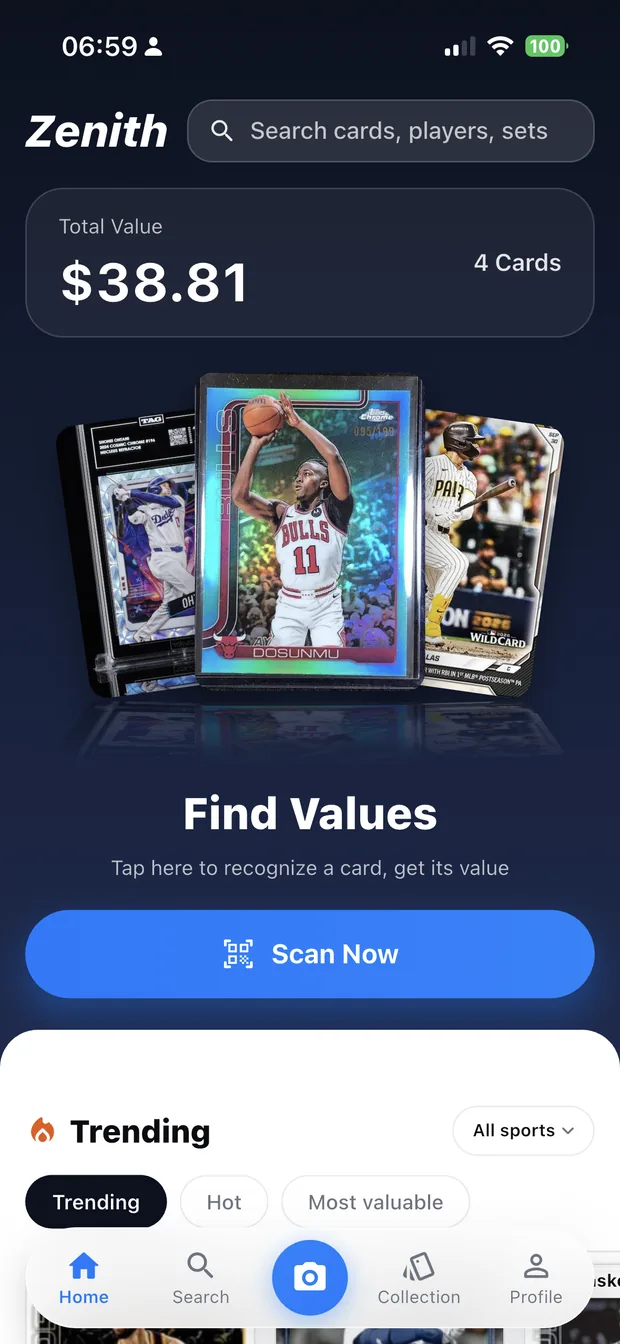
The framework
Score each app on four jobs — identification, valuation, tracking and organisation — using the same cards for every app. The one that wins on identification and valuation is usually the right answer, because those are the two jobs you cannot do yourself at scale.
- Identification: does it return the parallel, or only the player?
- Valuation: are values from completed sales, and can you see them?
- Tracking: portfolio total, price history, grade recorded per card.
- Organisation: folders, filters, search, want list.
The test set
Five cards will expose almost every difference. Take them from your own collection so you can judge the results rather than trusting them.
- A numbered parallel — tests whether the version is identified.
- A foil or refractor card — tests the finish handling.
- A vintage card with no card number — tests set identification.
- A graded slab — tests handling of grades and labels.
- A common base card — tests whether it over-values the ordinary.
Scoring it honestly
Weight the four jobs by what you actually need. If your collection is already catalogued, identification matters less and valuation matters more. If you are starting from a shoebox, identification is the whole job.
Then check the commercial terms: what the free tier includes, what the paid tier costs, and what happens to your records if you leave. A collection that cannot be exported is a collection held hostage.
How it works
Three steps from a phone photo to a finished image
Scan the card
Point the camera at it — raw, sleeved, in a binder or in a slab.
Confirm the match
Check the player, year, set and parallel Zenith read.
See the value
The card lands in your collection with a market value attached.
FAQ
Frequently asked questions
How do I compare sports card apps?
Score each one on identification, valuation, tracking and organisation, using the same five difficult cards in every app. The winner on identification and valuation is usually right, because those are the jobs you cannot do yourself at scale.
What is the most important feature in a card app?
Identification that includes the parallel, because it decides the value. Everything else — folders, filters, price history — is useful only once the card has been identified correctly.
Do all card apps value cards the same way?
No. They differ in which sales they use, how they adjust for condition, and whether they identify the parallel at all. Two apps can give very different values for the same card, and the difference is usually identification.
What should I check before committing to a card app?
What the free tier includes, what the paid tier costs, and what happens to your records if you leave. A collection you cannot export is a collection you are locked into.
Try it on your next photo
Free to download on the App Store. iPhone and iPad only.