
 Value & selling
Selling sports cards on eBay
eBay is where most cards change hands, and the listings that work are boring: clear photos, a factual title, a defensible price and packaging that survives the post.
Photos and title
Buyers want to see the front, the back, and the corners. Four photos cover a raw card; add the label if it is graded. Shoot on a plain background in daylight, and make the surface visible — reflections hide scratches, and hiding scratches is how disputes start.
The title is search, not marketing. Player, year, set, card number, parallel and grade are the words buyers type. An emotional title does not get found.
- Front, back, corners, and any flaw.
- Daylight on a plain background; no flash.
- Title: player + year + set + number + parallel + grade.
- State the condition honestly, including the flaws the photos show.
Price, format and timing
A fixed price sells faster when you know the comps; an auction finds the market when you do not. The reliable version of an auction is a low starting price with no reserve, which attracts watchers and usually ends near the market price.
Timing matters for the audience: listing so that the auction ends on a Sunday evening, when the most buyers are active, is an old habit that still works.
- Fixed price with comps behind it, for known cards.
- Low starting auction with no reserve, for uncertain ones.
- End auctions on a Sunday evening.
- Free shipping priced into the card beats a separate charge.
Packing and after the sale
Packaging is where sellers lose money. Sleeve the card, put it in a rigid holder, seal it in a bag without tape touching the card, sandwich it between cardboard and send it tracked for anything valuable.
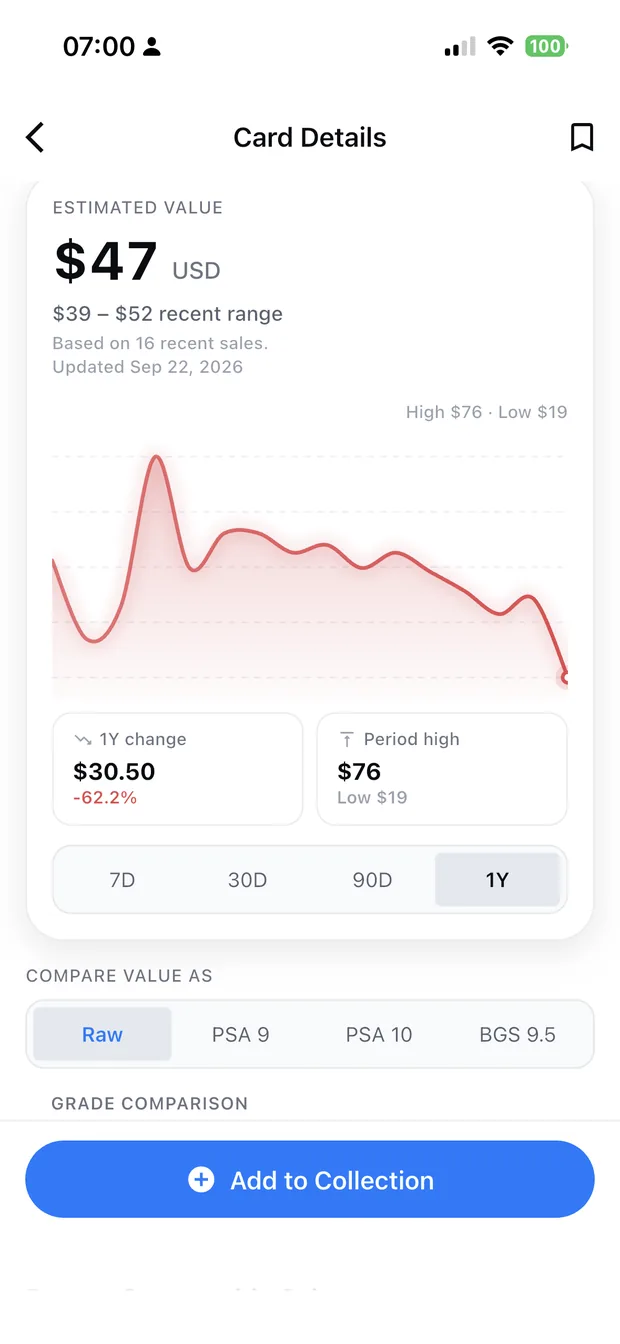
Keep a record of what you sold and for how much. That is both a tax record and the beginning of your own comps database, which is what makes the next sale easier to price.
- Sleeve, holder, bag, cardboard, tracked post.
- No tape in contact with the card or the holder face.
- Record the sale price — it is a comp for next time.
- Offer returns on graded cards, where condition is already documented.
How it works
Three steps from a phone photo to a finished image
Scan the card
Point the camera at it — raw, sleeved, in a binder or in a slab.
Confirm the match
Check the player, year, set and parallel Zenith read.
See the value
The card lands in your collection with a market value attached.
FAQ
Frequently asked questions
How do I sell sports cards on eBay?
Photograph the front, back and corners in daylight, write a factual title with the player, set, card number and parallel, price against recent comps, and package the card so it cannot move in the post. Send anything valuable tracked.
Should I use auctions or fixed prices?
Fixed price when you know the comps and the card is in demand; a low-start auction with no reserve when you are unsure, because it lets the market find the price and attracts watchers.
How many photos does a card listing need?
At least four: front, back, and the corners or any flaw. Graded cards need a clear photo of the label. Photographs are also your protection in a dispute, so show the flaws deliberately.
How should I package a card for shipping?
Penny sleeve, then a top loader or Card Saver, sealed in a bag without tape touching the card, sandwiched between rigid cardboard, and sent tracked for anything valuable. Nothing inside the parcel should be able to move.
Try it on your next photo
Free to download on the App Store. iPhone and iPad only.