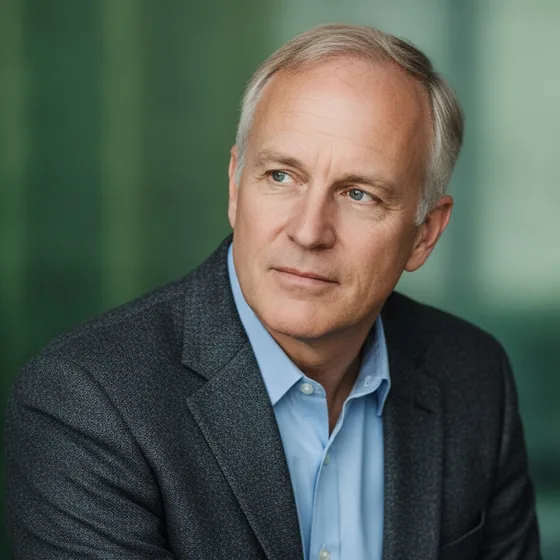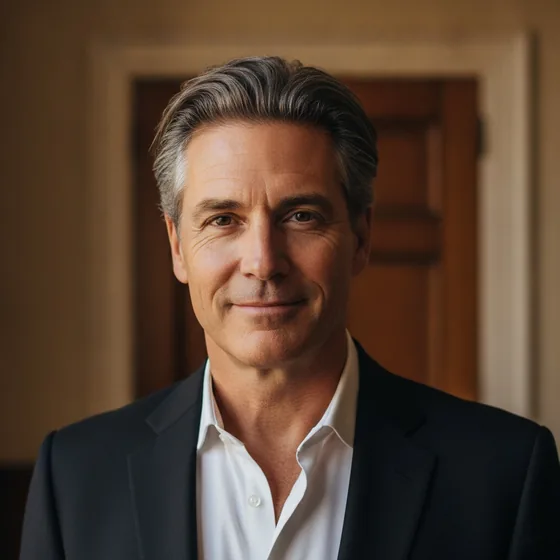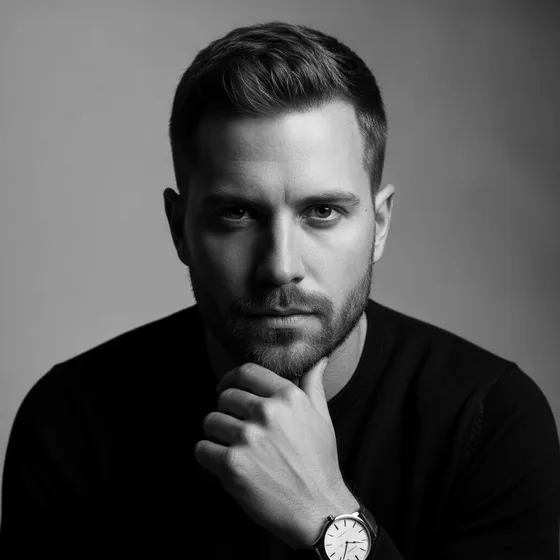
AI headshots have gone from a novelty to something people quietly use for their LinkedIn photo. The useful question is not whether they are real, but where they are appropriate and how to judge the output.
How they work, in one paragraph
You upload a set of ordinary photos of yourself. The model learns what your face looks like from those photos — the shape, the features, the hair, the skin tone — and then re-renders that face in new conditions: studio lighting, a different background, a jacket, a more formal posture. It is closer to a very sophisticated relight-and-restyle than to drawing a stranger.
What they are genuinely good at
AI headshots solve the two problems that stop most people from having a good photo: the setup and the session.
- Lighting and background — handled, consistently, without a studio.
- Consistency — a whole set in the same look, which matters for team pages and profile grids.
- Turnaround — minutes rather than a booking, a shoot and an edit.
- Variety — a formal portrait for print and a warmer one for social, from the same source photos.
Where they still fall short
Be honest about the limits. If your job depends on a specific, precisely lit, high-resolution image — an actor's casting headshot, a magazine portrait, a large-format print — a real photographer with a real studio is still the right answer.
Very specific styling requests, unusual lighting and complicated backgrounds are also where generated output is most likely to look off. And if the source photos are poor, the output will be too.
How to judge a set
Run through this before you publish anything.
- Does it look like you? Show it to someone who knows you and ask directly.
- Are the eyes and teeth natural? This is where generation most often slips.
- Is the lighting consistent across the set, or does each image look like a different shoot?
- Would it survive being seen next to a real photograph of you?
- Is it appropriate for where you are posting it?
Where it is appropriate to use them
For profiles, team pages, speaker bios, internal directories and personal sites, a generated portrait is a practical choice and increasingly common. Where a photo is being used as evidence — press coverage, casting, credentials — use a real photograph and say so if asked.
The one thing worth avoiding is presenting a generated portrait as an untouched photograph in a context that implies it is one. Be straightforward, and the tool is simply a faster route to a decent picture.
Frequently asked questions
Do AI headshots actually look like the person?
A good generator preserves your features, hair and skin tone, because it works from your own photos. The result should be recognisably you with better lighting and a cleaner background. If it does not look like you, the usual cause is a poor or too-small set of source photos.
How many photos do I need to upload?
Around six to ten varied selfies work best. Different angles, expressions and lighting give the model more to work with, which is what makes the output look like you rather than like a generic face.
Is it acceptable to use an AI headshot on LinkedIn?
It is, provided the image is a genuine likeness of you. A generated portrait from your own photos is a retouched version of you; using a fabricated person would be misleading and is not what these tools produce.
Can I use AI headshots for a résumé or a job application?
In most cases yes, particularly where a photo is optional and you simply want a clean, neutral image. Where a market or an employer explicitly requires a real photograph for identity purposes, follow their requirement.