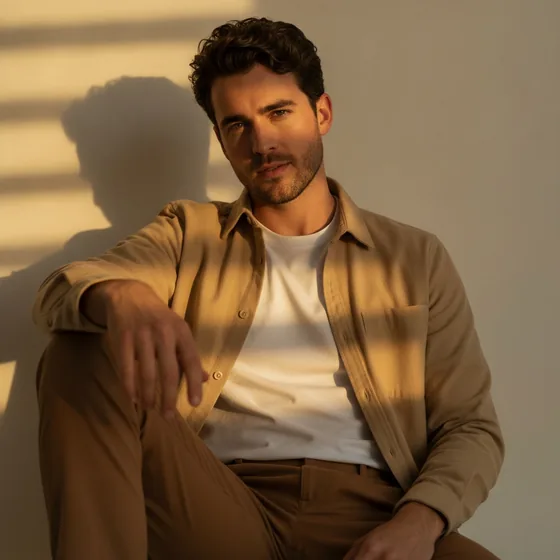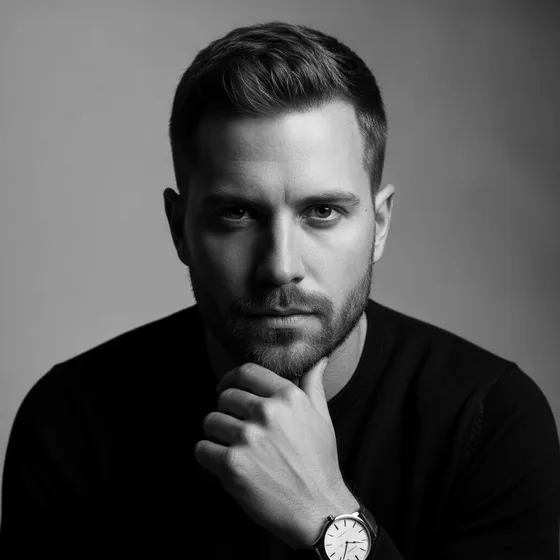
A good headshot is not a matter of an expensive camera. It is light, background and expression, in that order — and all three are solvable in a normal room.
Light: one big soft source, in front of you
The single biggest upgrade is a large, soft light in front of your face. A window on an overcast day is ideal. So is a window with a thin white curtain over it. What you are avoiding is a small bright source, which creates hard shadows under the eyes and nose.
If you have no usable window, a lamp bounced off a white wall or a large sheet of white card works. The bounce is the point — it turns a small harsh light into a big soft one.
- Face the light. Do not let it fall on one side only unless you want that look deliberately.
- Turn off ceiling lights that cast downward shadows.
- Avoid mixed colour temperatures — a warm lamp plus cool daylight looks off.
- Check for a reflection in glasses and move the light until it disappears.
Background: simple and far enough away
A plain wall a metre or so behind you is the safest choice. The distance matters because it separates you from the background and softens any texture or shadow on it.
If the wall has a picture on it, or the room has a busy shelf, either move or get closer to the wall so your head covers more of it. A clear background reads as professional; a cluttered one reads as a snapshot.
Framing: head and shoulders, eyes high
Crop to head and shoulders, with a little space above your head. Place your eyes in the upper third of the frame — this is what makes the difference between a portrait and a mugshot.
Shoot at eye level or very slightly above. A camera below eye level emphasises the chin and nostrils; a camera far above looks like a surveillance photo.
The five mistakes to avoid
These are the ones that most often give away a home headshot.
- Direct flash — flattens features and adds a hard shadow behind you.
- A camera too close, which distorts proportions. Step back and crop, or use a longer lens.
- Looking down at the phone, which is the same as a camera below eye level.
- A busy or distracting background.
- A stiff, straight-on expression. Turn your shoulders slightly and relax your jaw.
Or generate one instead
If you would rather skip the setup, AI Headshot Pro takes a handful of ordinary selfies and generates a set of studio-quality portraits. It is not a replacement for a photographer when you need a specific look, but for the LinkedIn photo, the résumé and the team page it removes the lighting and background problem entirely.
The selfies you feed it still benefit from the advice above: soft, even light and a plain background make for a better starting point.
Frequently asked questions
Can I take a professional headshot with my phone?
Yes. Modern phone cameras are more than good enough for a headshot. The limiting factors are light and background, not resolution — a phone shot in soft window light beats a camera shot with direct flash.
What should I wear in a headshot?
Something you would wear to the interview or the client meeting, in a solid colour that contrasts with the background. Avoid busy patterns and large logos. If you are unsure, a plain shirt or blouse in a mid or dark tone is the safe choice.
How many photos should I take?
Take plenty — thirty or more — and vary your expression and the angle of your shoulders rather than the setup. Small changes in posture make a bigger difference than small changes in lighting once the light is right.
Do I need a tripod?
A tripod helps but a stack of books and a timer work just as well. What you actually need is the camera at eye level, which is hard to hold steady at arm's length.